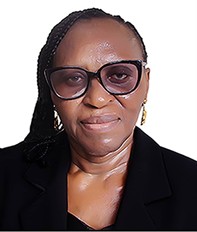
Dr. Elizabeth Osim Elhassan is a
public health consultant with a four-decade career at the forefront of
eliminating Neglected Tropical Diseases (NTDs) across Sub-Saharan Africa. Her
pioneering work in research, strategy, and community-led interventions has been
pivotal in shaping global health policy and practice. Dr. Elhassan co-developed
foundational frameworks that have become cornerstones of NTD control and
elimination, including the Community-Directed Treatment with Ivermectin (CDTI)
and the integrated Community-Directed Interventions (CDI) approach. Her
involvement in innovative research demonstrated how the CDTI platform could be
successfully leveraged to deliver other essential health services, such as
vitamin A supplementation, insecticide-treated bed nets, home management of
malaria, and TB treatments, significantly amplifying its impact in public
health. Dr. Elhassan currently co-chairs the WHO/AFRO Regional Programme
Advisory Group for PC-NTDs (RPAG) and has served on the WHO Technical
Consultative Committee for the African Programme for Onchocerciasis Control
(APOC), the Mectizan Donation Program (MDP) Expert Committee, and the ESPEN
Steering Committee. She has also been an executive committee member of the NNN
and has chaired both the national and global NGDO groups for onchocerciasis
elimination. During her 22-year tenure at Sightsavers, which culminated in her
role as Technical Director of Onchocerciasis and Lymphatic Filariasis, Dr.
Elhassan was instrumental in establishing National Onchocerciasis Elimination
Committees (NOECs) in twelve African countries, building sustainable national
capacity for disease elimination. Dr. Elhassan holds a Ph.D. in Veterinary
Pathology and an M.Sc. and B.Sc. (Hons) in Physiology from the University of
Ibadan, Nigeria. She began her career with 14 years as a researcher at the
Nigerian Institute for Trypanosomiasis Research. Today, she continues to
contribute actively to peer-reviewed literature and is dedicated to mentoring
the next generation of public health leaders and scientists.