Biodiversity, Ecology and Conservation of Coastal and Marine Ecosystems
Prof. Paul Alain Nana
Prof. Paul Alain Nana holds a PhD in Hydrobiology and Environment, awarded in 2015 by the University of Yaoundé I, Cameroon. Supported in part by the French Cooperation Agency (SCAC), his doctoral research was conducted jointly at the Laboratory of Hydrobiology and Environment of the University of Yaoundé I and the Microorganisms: Genome and Environment Laboratory (LMGE) at the University of Clermont Auvergne, France. From November 2016 to December 2019, he completed a three-year postdoctoral fellowship at LMGE, where his research focused on the synecology of microorganisms — including eukaryotes, prokaryotes, and viruses — in volcanic lakes (notably Lakes Nyos and Monoun) as well as in coastal and marine ecosystems in Cameroon.
As an environmental educator and author of numerous scientific publications, Dr. Nana has made significant contributions to the design and implementation of several development projects in Cameroon. Over the past decade, he has actively participated in a wide range of national and international conferences, workshops, and training programs addressing key environmental issues, including biodiversity conservation, ecology, water and sanitation, sustainable development, climate change, and Green Climate Fund initiatives.
Dr. Nana currently serves as Senior Lecturer and Researcher in the Department of Oceanography and Limnology at the National Higher School of Agronomy, Fisheries and Veterinary Medicine, University of Douala, Cameroon. He is also the head of the Bio-ECOME Research Group within TREND Foundation, where he leads research and capacity-building initiatives focused on the sustainable management and conservation of aquatic ecosystems.
Background
Cameroon’s National Development Strategy 2020–2030 (SND30), which outlines the pathway for the structural transformation of the national economy, integrates Sustainable Development Goals 6 (Clean Water and Sanitation), 14 (Life Below Water), and 15 (Life on Land) within Chapter 3, Section 6. This strategic framework recognizes the critical importance of sustainable natural resource management and aquatic biodiversity conservation for the country’s socio-economic development.
Coastal and aquatic ecosystems are among the most extensively studied environments worldwide because of the essential ecological, economic, and social services they provide. These ecosystems deliver a broad range of ecosystem services, including provisioning services such as food, oxygen, raw materials, and medicinal resources; regulating services such as climate regulation, water purification, flood mitigation, and air quality improvement; supporting services that sustain biodiversity and ecological processes; and cultural services that contribute to recreation, ecotourism, and human well-being. Aquatic ecosystems support a remarkable diversity of life, including fungi, viruses, bacteria, algae, plankton, crustaceans, mollusks, fish, reptiles, and mammals. They serve as critical habitats, nursery grounds, and migration corridors for numerous species, while also functioning as natural systems for the purification, storage, and transformation of terrestrial inputs. Furthermore, they contribute to groundwater recharge and provide livelihoods for millions of people worldwide. In many coastal regions, local economies depend heavily on fisheries, aquaculture, tourism, and other aquatic resource-based activities.
Despite their importance, coastal and marine ecosystems are increasingly threatened by climate change and growing anthropogenic pressures. Pollution, habitat degradation, overexploitation of resources, unsustainable land-use practices, and biodiversity loss are causing unprecedented ecological disturbances. In Cameroon, coastal and marine environments are particularly affected by deforestation, land degradation, inadequate management of household, municipal, and industrial waste, as well as untreated runoff and wastewater discharges. These pressures contribute to declining water quality, habitat destruction, biodiversity loss, depletion of fish stocks, proliferation of waterborne pathogens, and disruption of ecosystem functioning. Such impacts not only threaten environmental sustainability but also pose serious risks to public health through the contamination of water resources and seafood products. Given these challenges, there is an urgent need to strengthen scientific research on aquatic ecosystems to improve understanding of their structure, functioning, and resilience. Such research is essential for monitoring environmental degradation, informing evidence-based policy and management decisions, developing innovative nature-based solutions for ecosystem restoration, and ensuring the long-term sustainability of aquatic resources and the ecosystem services upon which communities depend.
Research Goals
Bio-ECOME research is dedicated to advancing the discovery, documentation, and conservation of marine and coastal biodiversity. Through scientific research and biodiversity assessments, the organization generates knowledge on aquatic species, ecosystems, and key indicator species that help evaluate ecosystem health and inform conservation planning. A major focus of Bio-ECOME is increasing public awareness of the impacts of marine and coastal pollution on ecosystem functioning, ecosystem services, seafood safety, and human health. By investigating the causes and effects of pollution, the organization contributes to efforts aimed at reducing water contamination and restoring degraded aquatic resources. Bio-ECOME also promotes understanding of the ecological, economic, and social benefits provided by healthy aquatic ecosystems, including fisheries, climate regulation, coastal protection, tourism, and cultural values. This knowledge supports sustainable resource management and strengthens conservation efforts. Recognizing the importance of inclusive conservation, Bio-ECOME encourages public participation and integrated coastal and marine ecosystem management. The organization empowers coastal communities and local authorities through participatory approaches, community-based monitoring programs, and environmental stewardship initiatives. Another key priority is the integration of indigenous knowledge systems and cultural heritage into conservation and resource management strategies. By combining traditional knowledge with scientific research, Bio-ECOME promotes locally relevant and sustainable solutions. In response to climate change and other human-induced pressures, the organization develops and promotes nature-based solutions and adaptive management measures that enhance ecosystem resilience and biodiversity conservation. Ultimately, Bio-ECOME aims to provide scientific evidence and decision-support information that guide policy development, support sustainable development, and ensure the long-term protection of coastal and marine ecosystems for future generations.
Our research is centered on the biological, ecological, economic, ethical, and societal challenges associated with the protection, conservation, and sustainable management of Cameroon’s coastal and marine ecosystems and their fisheries resources. We investigate how human activities and global environmental changes influence biodiversity, ecosystem functioning, conservation outcomes, and public health along the Cameroonian coastline. Recognizing the growing pressures imposed by land-use change, overexploitation of natural resources, climate change, pollution, and biological invasions, our work seeks to advance scientific knowledge and develop innovative solutions that promote ecosystem resilience and the long-term sustainability of ecosystem services. Particular emphasis is placed on maintaining the ecological integrity of coastal and marine environments while supporting the livelihoods and well-being of coastal communities.
Our research is organized around four complementary thematic areas: i) Impacts of global change on coastal and marine biodiversity and mitigation strategies; ii) Pollution assessment and control in coastal environments and associated human health risks; iii) Conservation and restoration of marine biodiversity, including Marine Protected Areas; iv) Population dynamics, ecology, and sustainable management of coastal and marine habitats and resources.
Through these four research axes, we aim to generate high-quality scientific knowledge, support evidence-based decision-making, strengthen environmental stewardship, and contribute to the sustainable conservation and management of Cameroon’s coastal and marine ecosystems for present and future generations.
Research Axis #1 - Impacts of global change on coastal and marine biodiversity and mitigation strategies
This research axis examines how environmental variability and global change drivers influence the structure, diversity, and functioning of coastal and marine ecosystems. Particular attention is given to the effects of climate change, habitat degradation, invasive species, and fluctuations in physical and chemical environmental parameters on marine biodiversity.
Research activities include : i) Assessing the responses of marine and coastal species to environmental and climatic changes; ii) Evaluating the impacts of anthropogenic disturbances on ecosystem structure and functioning; iii) Investigating biodiversity patterns across environmental gradients and seasonal cycles; iv) Developing adaptation and mitigation strategies to enhance ecosystem resilience and biodiversity conservation.
Research Axis #2 - Pollution assessment and control in coastal (beach and estuarine) waters and associated human health risks
This research axis focuses on understanding the sources, distribution, and ecological consequences of pollution in coastal and estuarine environments, as well as its implications for human health.
Specific objectives include: i) Assessing the influence of tides, hydrodynamics, and environmental gradients on the distribution of potentially pathogenic microorganisms, including bacteria, protozoa, helminths, and fungi, in beaches and estuarine waters; ii) Evaluating microbial water quality and associated public health risks for coastal communities and recreational users; iii) Investigating the occurrence, transport, fate, and ecological impacts of emerging contaminants, including plastics and microplastics, pharmaceutical residues, pesticides, and per- and polyfluoroalkyl substances (PFAS); iv) Assessing the contamination of seafood products, seawater, and marine sediments, and evaluating potential risks to food safety and human health; v) Supporting the development of monitoring frameworks and pollution mitigation strategies for coastal environments.
Research Axis #3 - Conservation and restoration of marine biodiversity
This research axis aims to develop science-based approaches for the conservation, restoration, and sustainable management of marine biodiversity and ecosystem services.
Key research themes include: i) Biodiversity assessment, monitoring, and conservation planning ; ii) Evaluation of the effectiveness of Marine Protected Areas (MPAs) and other conservation measures ; iii) Restoration of degraded coastal and marine habitats ; iv) Identification and mitigation of major threats to marine biodiversity, including pollution, habitat loss, overexploitation, and climate change ; v) Promotion of ecosystem-based management approaches and nature-based solutions for biodiversity conservation.
Research Axis #4 - Population dynamics, ecology, and sustainable management of coastal and marine habitats and resources
The objective of this research axis is to improve scientific understanding of the ecology, functioning, and sustainable use of Cameroon’s coastal and marine resources.
Research activities focus on: i) Studying the population dynamics, distribution, and ecology of marine organisms ; ii) Assessing the functional diversity and ecological roles of key taxa, including invertebrates, fishes, reptiles, and marine mammals ; iii) Evaluating habitat quality, ecosystem productivity, and resource availability ; iv) Supporting sustainable fisheries management and conservation of aquatic resources ; v) Providing scientific evidence to guide policy development, resource governance, and ecosystem-based management strategies.
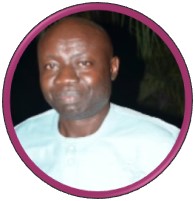
Prof. Paul Alain Nana

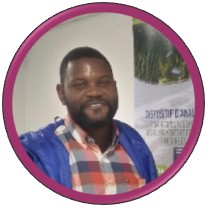

Prof. Télesphore Sime-Ngando
Senior Research Scientist in environmental microbiology and aquatic microbial ecology, UMR 6023, French National Centre for Scientific Research (CNRS) and University Clermont Auvergne, Clermont-Ferrand, France.
Prof. Rosa de Fátima Lopes de Freitas
Senior Research Scientist in Marine Biology and Environment, Centre for Environmental and Marine Studies (CESAM), University of Aveiro, Aveiro, Portugal.
Dr. Estelle Masseret
Senior Research Scientist and Associate Professor in aquatic microbial ecology, Marine Biodiversity, Exploitation and Conservation (MARBEC) laboratory, University of Montpellier, Montpellier, France.
Prof. Paul Alain Nana
Group Leader
nana@trendfoundation.org
Dr. Siméon Tchakonte
Deputy Group Leader
tchakonte@trendfoundation.org